Team Play in Extreme Soccer
Role clarity, rotations, and invite habits for coordinated 3v3 street soccer on Steam.
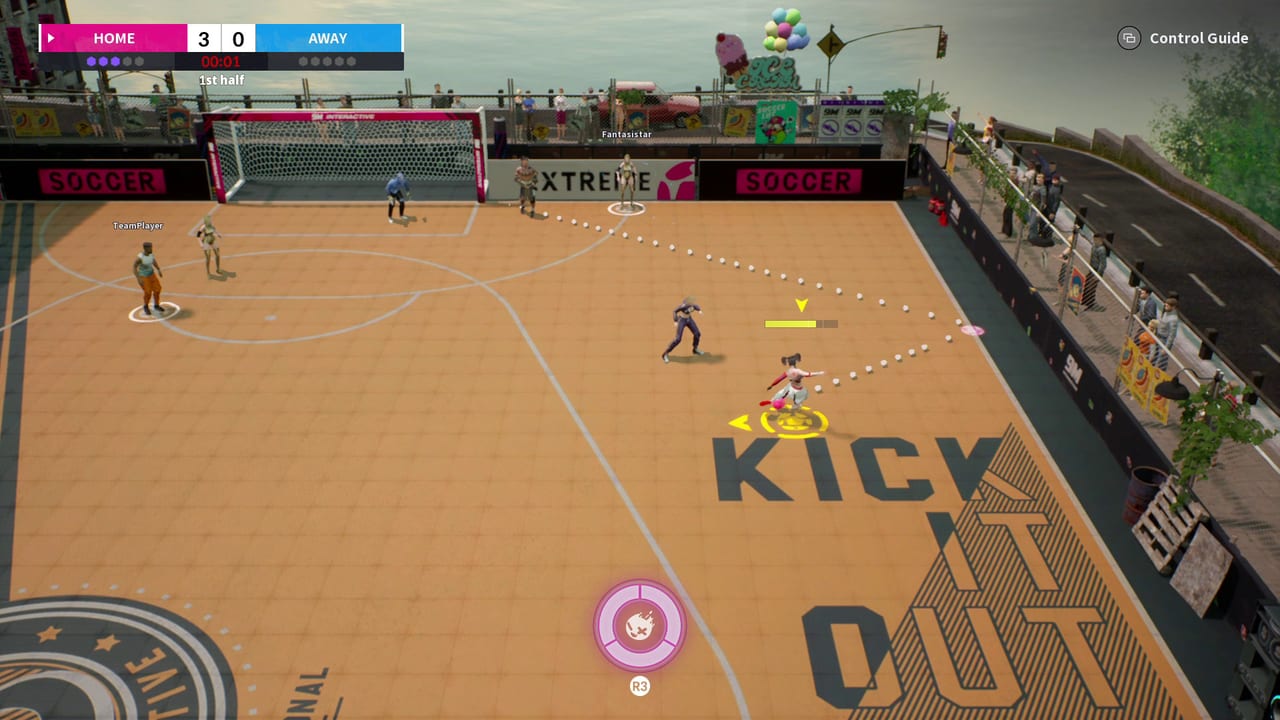
Extreme Soccer sells itself as a 3v3 team experience, and the Steam feature list even includes achievements for assists, inviting online friends, and stacking wins together. Solo talent still matters, but coordinated squads beat hero carries on a street court where one missing rotation becomes a free lane. This guide explains how to assign roles, use assisted passing without chaos, invite friends efficiently, and keep defensive coverage alive while someone hunts a goal.
Pair this page with How to Play for fundamentals, How to Score for finishing jobs, Wall Physics for bounce choreography, and How to Win for closing scripts. Character synergies belong in the Players Hub and Tier List Hub. Input comfort is covered under Controls. For store context after the December 2021 delist, skim Review and Updates. Utilities and destinations live in Tools and the Links Hub.
Why three-player soccer demands roles
With only three outfield players, overlapping responsibilities are inevitable, yet total freelancing fails. If all three chase the ball, walls become unguarded highways. If all three hang high, a single intercepted pass becomes a breakaway. Successful teams rotate through temporary jobs instead of permanent classes:
- Primary presser — delays the carrier and forces rushed touches.
- Lane cutter — shades wall banks and cutback seams.
- Outlet / late runner — stays available for assisted escapes and far-post arrivals.
Call the jobs in plain language over voice chat when you can. Extreme Soccer’s online multiplayer is far more readable when one person owns the first press and another owns the rebound crash.
The assisted passing contract
Assisted passing exists so teammates can connect across the court without perfect manual laser aim. That convenience becomes a liability if receivers stand still or stack on the same half-space. Make a simple contract before the match:
- The carrier looks for the freest teammate or cleanest wall first.
- Off-ball players offer staggered heights — one short support, one stretch run.
- Nobody calls for the ball from an identical pocket as a teammate.
When two players occupy the same lane, the assisted pass has nowhere intelligent to go. Spacing is the real “assist button.”
Invite culture and party stability
Because Extreme Soccer was delisted for new purchases while remaining playable for owners, organising a skilled friend group is one of the best quality-of-life upgrades available. Invite online friends intentionally: agree on character roles before queue, decide who speaks during transitions, and rematch while chemistry is warm. The Team Player achievement line rewards repeated invites, but the competitive reason matters more — shared language beats random queue silence.
If your party is two players and one random, the duo should take the more complex jobs (wall-setting and late runs) while letting the random play a simple press-or-shoot script. Complexity dumped on strangers creates turnovers.
Offensive rotations that create free men
Good offense in Extreme Soccer looks like basketball motion on a soccer court. Example pattern:
- Wide player carries until a defender steps.
- Central teammate shows short for a recycle.
- Opposite teammate times a far-post or wall-bounce arrival.
- Carrier chooses assisted pass, wall bank, or shot based on which defender moved first.
That pattern feeds How to Score without requiring flashy solo dribbles. Another pattern is the wall triangle: pass to wall, teammate receives, third player crashes the cutback. Practice it until the third run is automatic.
Defensive rotations that stop free men
Defend in layers, not swarms. Nearest player jockeys. Second player denies the obvious wall. Third player protects the goal-side lane and prepares the outlet if you win the ball. After a tackle attempt, the failed tackler should recover through the middle instead of jogging in the opponent’s peripheral vision. Intercept achievements are nice; leaving a 2v1 behind you is not.
Communicate “I press,” “I wall,” and “I stay” as three short calls. Those three words prevent double commits. If your group refuses voice chat, type a pre-match role plan and stick to it for the full session.
Ability coordination across five characters
Unique abilities become stronger when staggered. Two skills fired into the same crowded box often cancel value; one skill that freezes a marker while a teammate finishes is match-winning. Before queue, glance at the Players Hub and decide who owns disruption versus who owns finishing bursts. Tier debates in the Tier List Hub matter less than complementary cooldowns inside your trio.
A practical rule: the player with the best current angle asks for the ball; the player with the best ability window waits for that angle to appear. Ego shoots lose to sequenced teamwork.
Assist hunting without soft play
Assists are both an achievement track and a health metric for team offense. Hunt them by playing early balls into runners, not by refusing open nets. If you are wide open, shoot. If a teammate is opener, pass. The discipline is honesty about who has the higher percentage finish in that exact second. Teams that argue after every touch bleed clock and morale.
Special situations for squads
Kickoff: decide who presses first and who shades the wall on the opening touch. After you score: the scorer drops into a lane-cut role for thirty seconds while adrenaline fades. After you concede: avoid triple-sprint revenge; reset shape, win one clean possession, then attack. Late lead: assign one player as safety outlet at all times — detailed in How to Win. Late deficit: designate one wall specialist and one crash specialist so attempts are not random.
Practice plan for friends
Play three matches with locked roles, then swap. Track assists, turnovers under press, and whether both wide players ever stacked. Review one failed sequence per match without blame language. Chemistry improves faster from specific notes (“our left wall was empty for two counters”) than from vague complaints.
Common team-play failures
- Three players pressing the same carrier.
- Silent queue with no kickoff plan.
- Ability overlap in the same second.
- Receivers standing shoulder-to-shoulder.
- Ignoring invites and then expecting pro rotations from strangers.
Extreme Soccer’s online 3v3 identity only fully appears when teammates treat the court like a shared puzzle. Master roles here, then sharpen the bounce puzzle in Wall Physics and the finishing puzzle in How to Score. Return to the Guides Hub whenever your squad needs a reset.
Frequently Asked Questions
Quick answers to the most common questions.
What roles work best in Extreme Soccer 3v3?
Use rotating jobs: primary presser, lane cutter for walls and cutbacks, and outlet or late runner. Swap as possessions change.
Should I always play with friends?
When possible, yes. Invites improve communication, and the game even tracks team invites. Duos should simplify plans for any random third.
How do I avoid assisted-pass chaos?
Stagger heights so one teammate offers short support and another stretches. Never stack two receivers in the same pocket.
Who should use their ability first?
Stagger cooldowns. Prefer the ability that creates a free finisher over two overlapping highlight attempts in the same box.
What should we do right after scoring?
Reset shape immediately. The scorer should take a lane-cut or safety role briefly so adrenaline does not create a free counter.
Where do we learn bounce patterns as a team?
Study Wall Physics together, then assign one wall-setter and one crash runner before the next queue.