How to Play Extreme Soccer
A complete first-session guide for Steam owners learning 3v3 street soccer movement, passing, and abilities.
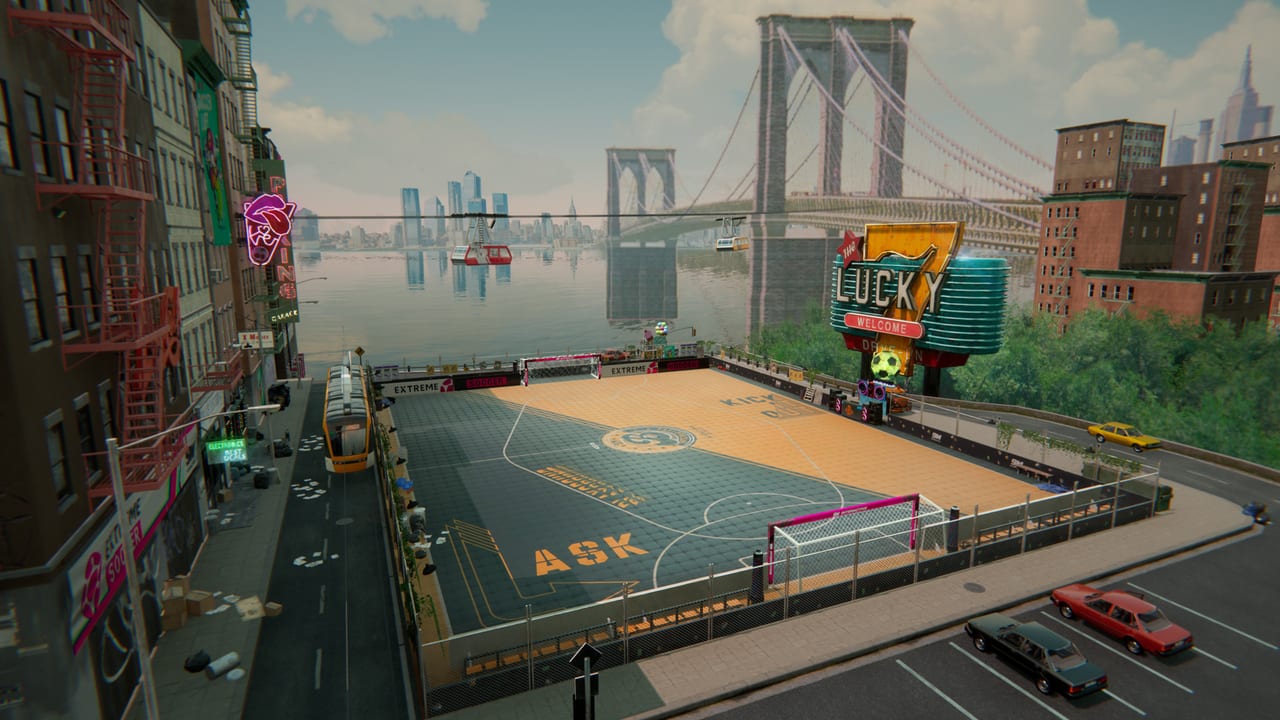
Extreme Soccer is a competitive online 3v3 street soccer game from 9M Interactive on Steam (AppID 1477730). It released on February 4, 2021, stayed in Early Access, and had new purchases disabled around December 2021. If the title is already in your library, you can still launch it, queue online, and practice the systems this guide explains. Matches focus on one athlete under your control, two teammates, physics-reactive walls, assisted team passing, and five characters with unique abilities. Full controller support makes pad play a natural default, though keyboard users can still learn the same decision habits.
This page is your onboarding spine. After you finish it, continue with How to Score for finishing, Team Play for roles, Wall Physics for bounce lines, and How to Win for full-match planning. If queues feel empty, pair this guide with Find Matches and Invite Friends. Character comparisons belong in the Players Hub and Tier List Hub. Bindings and input feel live under Controls. Broader context sits in Review, Updates, Tools, and the Links Hub.
Match structure and what you control
Each Extreme Soccer match is a short street-court contest rather than a ninety-minute sim. You control a single field player while a goalkeeper holds the net. Your two teammates are either friends you invited or players found through online multiplayer. Because the squad is only three outfield bodies, every positioning mistake is visible: ball-watching leaves a lane open, and over-committing to a tackle can gift a 2v1 behind you.
Your jobs each possession are simple to say and hard to execute: receive cleanly, create a better angle than the one you started with, and either shoot with a clear sightline or recycle with a purpose pass. Off the ball, you either press the carrier, cut the wall bounce, or occupy a late-run pocket. Treat those jobs as rotating roles, not fixed labels.
First launch checklist
- Confirm Steam online status and that Extreme Soccer still installs from your library.
- Open settings and verify controller input if you use a pad — the game advertises full controller support.
- Browse the five playable characters and note which ability fantasy fits you: press disruptor, carry creator, or finishing specialist.
- Play a warm-up match focusing only on first touch and pass direction before chasing highlight goals.
- After the session, open How to Score while the mistakes are fresh.
Expect queue times to vary. The post-delist player base can be sparse. Use quiet queues as mechanical practice: wall angles, ability cooldown awareness, and recovery runs still matter against weaker opposition.
Movement and possession basics
Street soccer in Extreme Soccer rewards compact touches. Sprint everywhere and you will overrun the ball or collide into a tackle. Walk into space when you already have time; burst only when you must beat a press or arrive onto a wall rebound. When receiving, face a side of the court that keeps at least one teammate and one wall option in your peripheral vision. Facing the wrong wall is the most common beginner trap — you “own” the ball for a second, then have nowhere safe to go.
Possession is not hoarding. A five-second carry that draws two defenders and frees a teammate is good soccer. A fifteen-second carry that ends in a forced corner bounce under triple pressure is not. If two opponents converge, release early with the assisted pass system or a purposeful wall bank. The assisted pass is designed to help teammates connect across the court with a simple input — use it as a clarity tool, not as a panic button that ignores spacing.
Passing, walls, and the assisted system
Extreme Soccer markets intelligent wall use as a core feature of its dynamic physics engine. Mentally mark three pass types:
- Direct assisted pass to a free teammate in open grass (or court paint).
- Wall bank that changes the arrival angle so a teammate receives facing goal.
- Safety recycle that resets under pressure without surrendering the midfield third.
Direct passes win when a teammate already has a lane. Wall banks win when the defense sits in straight lines. Safety recycles win when your only job is to stop a counter. Deep timing details live in Wall Physics; for now, force yourself to look at a wall edge before every forced shot.
Abilities and character choice
There are five characters, each with unique stats and a special ability. Abilities are spectacular, but they are also cooldown tools. Burning a skill the moment it lights up often wastes the only reset you had for a true scoring chance. Early sessions should teach you the animation length and the recovery window after you fire an ability. Ask three questions before using it: Does this beat a specific defender? Does my teammate already have a better angle? Will I be useless if the skill misses?
Cosmetic outfits and gears let you style a character, but they do not replace mechanical fundamentals. Pick a character you can control cleanly for twenty minutes before you chase a “meta” label from the Tier List Hub.
Defense without a dedicated backline
There are no traditional defender / midfielder / striker lock-ins. Defense is a shared duty. The nearest player delays the carrier, the second player shades the wall bounce, and the third protects the cutback lane to the far post. Diving into every tackle creates the intercepts opponents want. Jockey first, tackle when the ball is exposed, then sprint recover if you miss. Achievement tracks even reward tackle and intercept volume, but volume without positioning just farms empty stats.
Practice plan for your first week
Day one: movement and assisted passes only. Day two: one intentional wall pass per possession. Day three: ability used only on clear 1v1 or rebound setups. Day four: play with at least one invited friend and assign roles from Team Play. Day five: combine scoring habits from How to Score with closing routines from How to Win. Keep notes on which wall side you mishandle most often.
Watch real Steam Extreme Soccer gameplay
The mid-article video is Steam Extreme Soccer gameplay from 9M Interactive — the same PC title this wiki covers, not a mobile sibling stand-in. Use it to preview match pace, ability flash, and compact-court chaos before you queue. Then launch your own library copy and practice the decision habits above: assisted passes, wall banks, and cooldown discipline. If finding humans is harder than learning touches, open Find Matches and Invite Friends next.
Common beginner mistakes
- Chasing the ball instead of cutting the next pass.
- Shooting every touch from bad angles because “offense feels productive.”
- Ignoring walls until you are already tackled.
- Picking characters solely for looks before learning one ability window.
- Skipping friend invites and then blaming solo queue for missing rotations.
Fix those five habits and Extreme Soccer becomes readable. The game rewards clarity more than elaborate skill chains. Master the basics here, then specialize through the rest of the Guides Hub.
Frequently Asked Questions
Quick answers to the most common questions.
Can I still play Extreme Soccer if it is delisted?
If you already own it on Steam, yes. New store purchases are disabled, but library launches and online play remain available for owners.
Is Extreme Soccer single-player or multiplayer?
It is built around online 3v3 multiplayer. Practice value still exists in quieter queues, but the design assumes human or matchmade team contests.
Should I use a controller?
Full controller support is a listed Steam feature and suits movement plus ability timing. Use whatever input you can aim and pass with consistently.
How many characters can I choose?
The Early Access roster ships with five unique playable characters, each with distinct abilities and stats.
What is the embedded gameplay video?
It is Steam Extreme Soccer gameplay from 9M Interactive — real PC match footage for this title’s pace, abilities, and street-court chaos.
What should I read after this guide?
Continue with How to Score for finishing, Team Play for roles, Wall Physics for bounce tactics, then How to Win for match closing. Use Find Matches and Invite Friends when lobbies are scarce.